In the field of oral implant restoration, a significant leap has been achieved over time—from quantitative accumulation to qualitative transformation. What began as a simple method of replacing missing teeth has gradually evolved into a highly specialized and refined discipline that integrates multidisciplinary knowledge with advanced technology, forming a precise and sophisticated branch of modern medicine. Throughout this continuous process of evolution, each wave of technological innovation and conceptual breakthrough has been interconnected and progressive, substantially advancing the standards of dental implant restoration.
From the early exploratory use of removable dentures, to the partial functional restoration offered by fixed bridges, and eventually to the widespread adoption of traditional dental implants—valued for their stability and lifelike appearance—every step has embodied the wisdom and dedication of dental professionals, while greatly improving the quality of life for countless edentulous patients.
However, as dental medicine has continued to develop and patients’ expectations for implant outcomes have grown, traditional implant techniques have begun to reveal limitations when faced with complex clinical cases. For instance, in cases of severe alveolar bone loss or restricted jawbone space, placing conventional implants can be extremely challenging or even impossible.
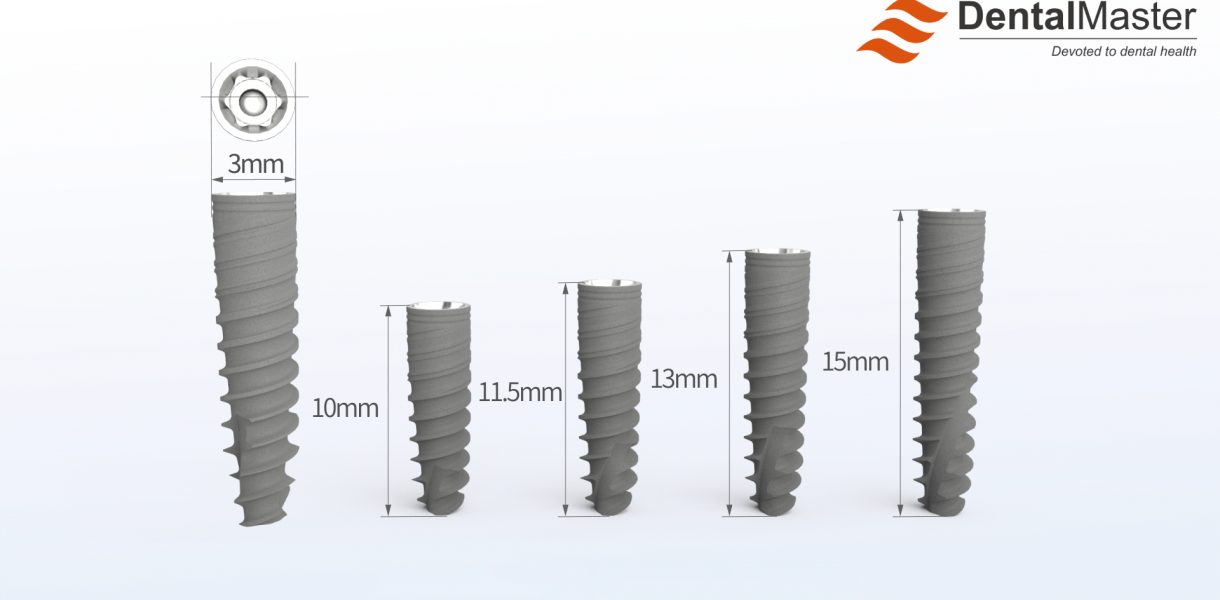
Against this backdrop, mini dental implants (with a diameter of less than 3 mm) have emerged. With their unique design philosophy and outstanding clinical performance, they offer innovative solutions to traditional implant challenges and are gradually reshaping the landscape of oral implant restoration.
How Are Mini Dental Implants Used, and How Do They Differ from Traditional Implants in Terms of Procedure?
When it comes to surgical trauma, mini dental implants (MDIs) demonstrate significant advantages. The implantation process for MDIs is considerably less invasive compared to traditional dental implants.
One of the most notable differences lies in the placement location. Mini implants are typically inserted so that they rest above the gum line, while traditional implants are placed beneath the gum tissue and anchored deep within the alveolar bone.
This difference in placement makes the mini implant procedure much simpler and more convenient. For patients, choosing mini implants often means a dramatically shorter treatment time. In most cases, the entire procedure can be completed in a single session under local anesthesia. Stitches are usually not required, which minimizes discomfort and simplifies postoperative recovery.
In contrast, traditional dental implants involve a much longer treatment cycle—often taking several months to complete. Patients typically need to visit the dental clinic at least twice: once for placing the implant and a second time, after osseointegration is complete, to install the final crown. Additionally, in cases where there is insufficient bone volume, bone grafting procedures may be required beforehand to provide adequate support for the implant. This further adds to the complexity, cost, and duration of treatment.
Why Choose Mini Dental Implants?
In today’s dental implant field, patients facing the challenge of tooth loss have a variety of options. Among them, mini dental implants are becoming the ideal choice for more and more people due to their unique advantages. Below, we’ll explore the key reasons for choosing mini dental implants from different perspectives.
A Blessing for Those Who Fear Invasive Surgery: Minimally Invasive and Painless Tooth Restoration
For many patients, the invasive nature of traditional implant surgery can be daunting. The process involves drilling into the jawbone and placing relatively large implants, which often causes significant pain and may result in postoperative swelling, bleeding, and a longer recovery period.
Mini dental implants, on the other hand, perfectly avoid these issues. With a diameter of less than 3mm, they cause minimal damage to surrounding tissue during implantation, truly achieving minimally invasive surgery. Dentists only need to make a small incision on the gum surface to precisely place the implant, significantly reducing both surgical risk and patient discomfort. For those who cannot tolerate invasive procedures, mini dental implants offer a gentler and more comfortable alternative for tooth restoration, allowing them to regain oral health with ease and minimal pain.
The Preferred Solution for Busy Individuals: Efficient, Convenient, and Time-Saving
In today’s fast-paced lifestyle, time is one of the most valuable resources. Traditional dental implant treatment usually takes several months, requiring patients to visit the dentist at least twice — once for implant placement, and a second time to install the crown after the implant has fully integrated with the jawbone. If the patient lacks sufficient bone volume, an additional bone grafting procedure may be needed, further extending the treatment period and increasing the number of visits and time investment.
In contrast, the mini dental implant process is efficient and convenient, saving a significant amount of time for busy patients. Due to its simple placement and minimal trauma, the entire procedure can typically be completed with just one session of local anesthesia and no need for stitches. Recovery is fast, and most patients can complete the entire treatment in a short time, quickly returning to their normal lives and work routines without frequent dental visits — achieving truly efficient tooth restoration.
The Ideal Option for Patients with Limited Jawbone Structure: Strong Adaptability that Overcomes Barriers
In clinical practice, some patients suffer from insufficient jawbone volume due to long-term tooth loss or osteoporosis, making it difficult to support full-size implants. In such cases, traditional implants often fail, and patients may miss the opportunity to restore their teeth through implants.
The emergence of mini dental implants brings new hope to these patients with limited jawbone conditions. Their small size reduces the demand for bone volume, allowing successful placement even in patients with minimal bone height or width. Thanks to their unique design and implantation method, mini dental implants can be stably anchored in the jawbone and provide a solid foundation for prosthetic restoration. This strong adaptability enables more patients to enjoy the benefits of dental implants — both in function and appearance — and regain their confident smile.
What is the success rate of mini implants?
Mini dental implants (also known as mini implants or MDIs) have shown a relatively high clinical success rate, generally ranging from 84% to 97%, depending on factors such as study design, patient demographics, and the site of implantation. Below is a summary of success rate data and analysis across various research contexts:
1. Core Supporting Data
Numerous studies, both domestic and international, report success rates between 89% and 97% for mini implants. For example:
- In a clinical observation of 68 patients, the treatment success rate with mini implants reached 97.1%, showing significant improvement in dental crowding and occlusal function.
- Another study analyzed two-year data from 65 patients (135 mini implants), reporting an overall success rate of 84%. The success rate in the maxilla (upper jaw) was 86%, higher than the mandible (lower jaw) at 77%. Adults had a higher success rate (87%) than adolescents (67%).
2. Success Rate Differences by Implant Site
- Maxilla vs. Mandible: The upper jaw typically has higher bone density, resulting in success rates approximately 10–15% higher than the lower jaw. As seen in the above study, maxillary success was 86%, compared to 77% in the mandible.
- Cortical bone thickness: A thickness of greater than 1.0 mm is essential for successful implantation. Thickness between 1.0–2.0 mm provides better outcomes. Patients with low-angle facial types usually have thicker cortical bone and thus higher success rates.
3. Relationship Between Age and Success Rate
- Adults vs. Adolescents: Adults generally have higher success rates than adolescents. For instance, in the two-year clinical study, the adult group had an 87% success rate, while the adolescent group only 67%. This may be due to lower bone density and more active bone remodeling during adolescence.
- Bone integration and age: Adults show more stable osseointegration, leading to higher long-term success. While initial mandibular stability may be higher, the maxilla can achieve better long-term stability as bone integration improves over time.
4. Key Factors Affecting Success Rates
Surgical Technique and Protocol
- Minimally invasive insertion: A small incision (3–4 mm) avoids large flaps, reduces trauma and bleeding, and improves initial stability.
- Torque control: Appropriate insertion torque—related to bone thickness, angle, and depth—is critical. Too much torque may damage bone; too little may reduce stability.
Postoperative Care and Patient Compliance
- Oral hygiene: Peri-implantitis is a leading cause of failure, increasing risk by 30%. Good hygiene education and regular maintenance significantly reduce complications.
- Timing of loading and force management: Whether immediate or delayed loading (e.g., after 2 weeks) should depend on individual patient conditions. Loading too early can impair bone integration; loading too late may extend treatment duration.
Implant Design Optimization
- Self-tapping vs. non-self-tapping: Self-tapping mini implants are easier to insert and remove due to lower osseointegration but may have lower success rates compared to non-self-tapping types. Selection should match bone condition and treatment goals.
- Materials and surface treatment: Biocompatible materials like titanium alloys enhance osseointegration speed and quality, thereby improving overall success rates.